
A good day to shop
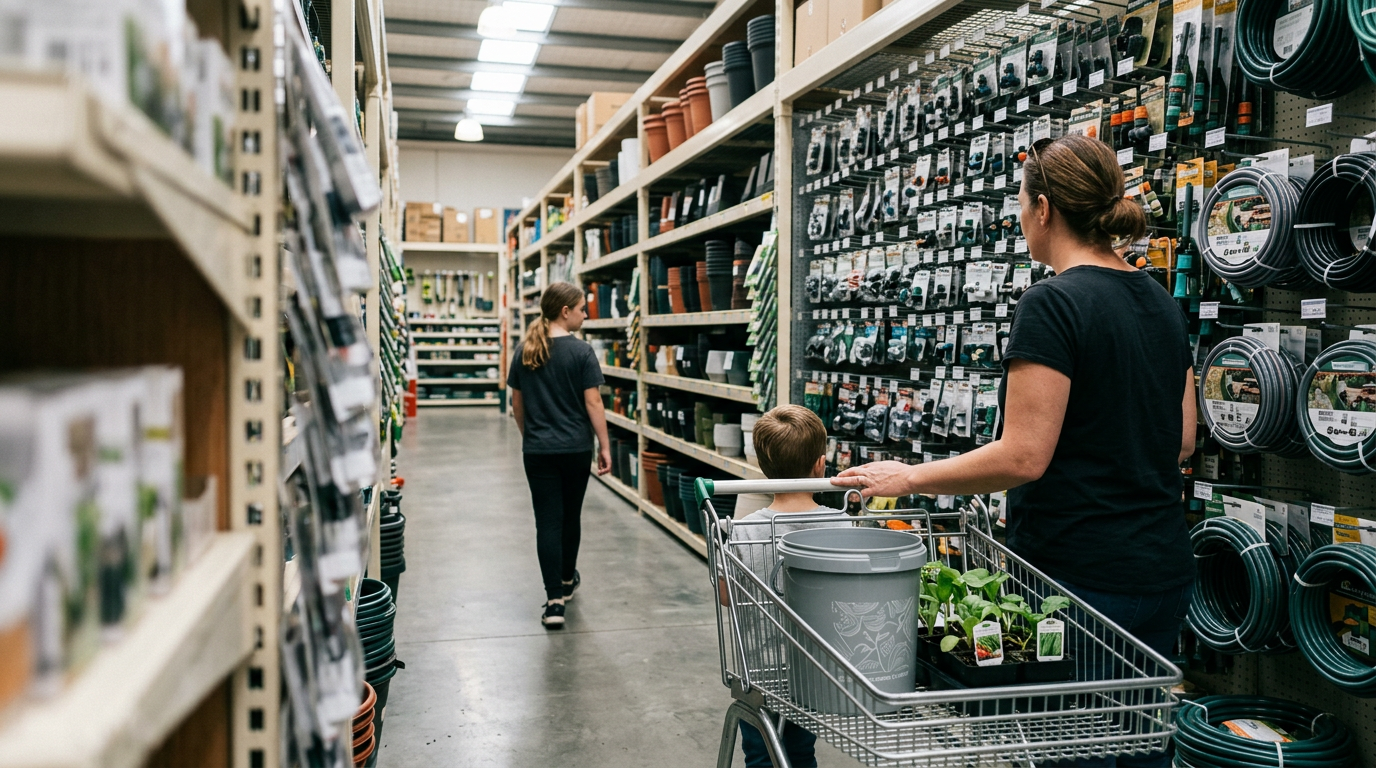
Summer is coming. My veggie garden needed water it could count on. So yesterday I loaded up the kids and headed to the biggest hardware store in town. It was the obvious choice. More range, more stock and most importantly more chance of getting it right in one trip.
I was a willing customer with a list. A bucket for the compost, a few more veggie plants to keep the beds producing and an impulse buy with the new hose end for the pot plants. All of it went into the trolley before I reached the main event.
The main event was irrigation. I have a hose that runs to the garden and I needed the fitting that joins it to a drip system. Just one more part and I was good to go!
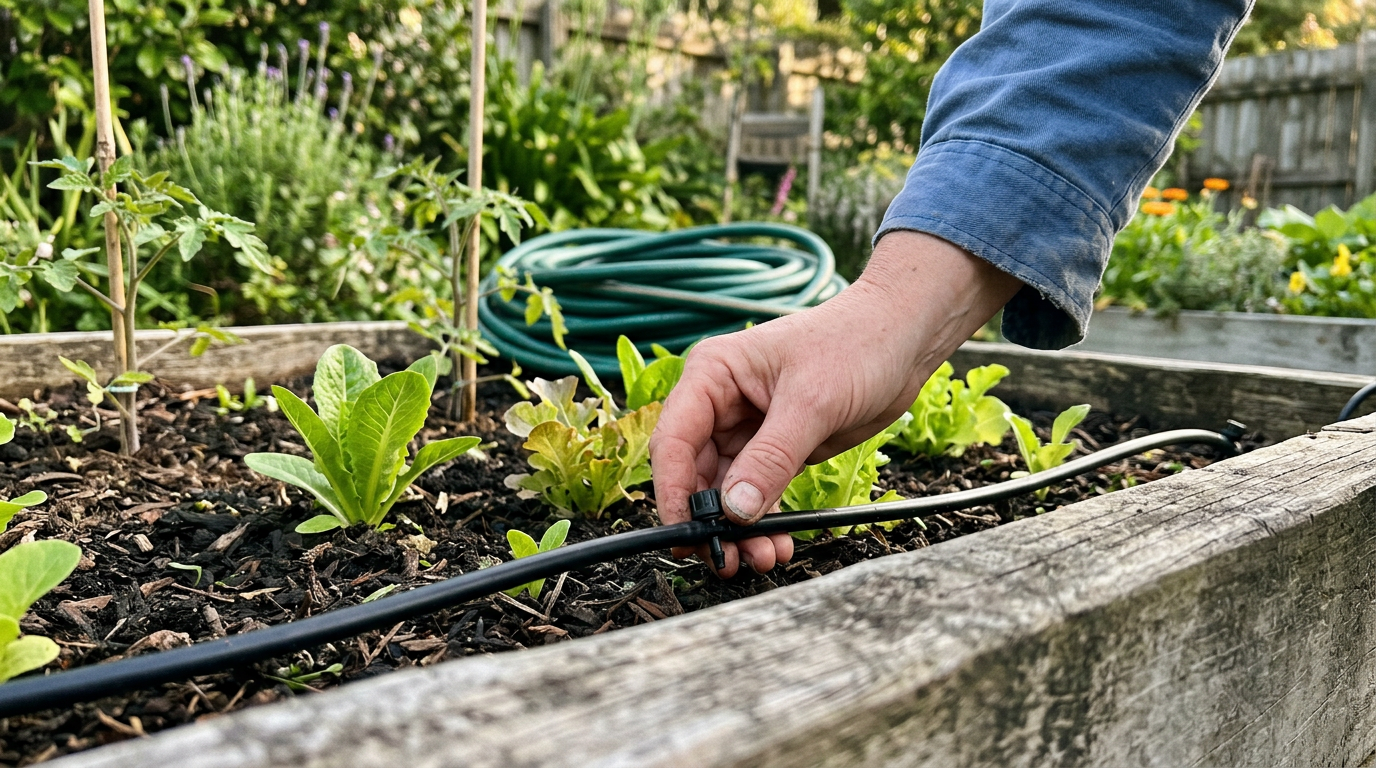
As I was in the isle, there was a wall of plastic. Hundreds of fittings, connectors and kits, all looking slightly the same and I knew what I wanted to do. BUT I had no idea which of these things would do it.
Where is everyone?
I sent my eldest off to find someone in a uniform and she came back empty handed. There was hardly anyone on the floor.
Eventually I found a staff member tidying the indoor plants. Plants are close enough to garden irrigation, I thought. I quickly realised she was kind, but also out of her depth. “Barry would be better at this,” she said. “But he’s gone home for the day.”
It was 3pm.
She offered to try. She scrolled her phone while I explained and she suggested a few parts, but none of it sounded like an answer to my question. At this point, I had a starter kit, extra hose and a bag of ground pins in my trolley with zero confidence that any of it would work together.
So I put the irrigation back. I paid for the rest, about $68, mostly because I couldn’t face reshelving it and then I walked out.
Down the road
The second hardware store felt different the moment I walked in.
The irrigation range was laid out the way a customer thinks. Start here, connect this, finish there so I found exactly what I needed without asking a soul.
I counted five or six staff nearby. One man stopped to check I was okay. I didn’t need him. But knowing he was there changed how I shopped. I stopped second guessing. I filled the trolley.
I left $150 lighter. That included three ice creams, because by then the kids and I needed a reason to stay excited about irrigation. I’ll call that a fair commission.
The sale nobody saw
The first store will never know I nearly spent $218 with them. Their sales report shows a $68 transaction. A perfectly ordinary basket. Nothing to see.
The other $150 walked out the door with me.
Now do the sum. One customer a day walking out like I did is $150 a day. Over a year that’s $54,750. From one shopper a day, at one store.
I doubt I was the only one.
Barry is not the problem
Barry deserves his afternoon off. The problem is a roster that sent product knowledge home while customers were still walking in.
This is the gap a sales report can’t show you. It counts what went through the till. It says nothing about the people who came in, looked around and left. Or the ones who bought half of what they came for.
That’s where footfall data earns its keep. When you know how many people walk in each hour, three questions get much easier to answer:
- Are your best people on the floor when your customers are?
- Which hours bring the crowds but not the sales?
- How much is a thin roster costing you in baskets that never got full?
Bellwether’s sensors count every visitor, hour by hour. Line that up with your rosters and sales. Suddenly the 3pm gap is impossible to miss.
Sales reports tell you what you sold. Bellwether shows you what you missed.